Why digital-first brands are moving marketing offline
10 Ways to Make a Corporate Event More Sustainable

How do you make a corporate event more sustainable?
Business events can have a significant environmental impact, with the carbon footprint increased by all of the main aspects of an event, such as travel, catering and venues. As there is a growing demand on businesses to demonstrate environmental responsibility, sustainability is now firmly on the event industry’s agenda.
Sustainable corporate event planning involves organising and delivering events in a way that reduces environmental impact while creating positive social and economic outcomes. This includes making responsible decisions about suppliers, event production and waste management.
Within the events industry, there is a growing number of conversations to get involved in and opportunities to collaborate towards larger goals. Wherever you are in your sustainability journey; continue to educate yourself, evolve and evaluate. As a B Corp certified events agency, Broadsword believes there are opportunities to make a meaningful difference at every stage of an event. Small changes in key areas such as travel and catering greatly reduce environmental impact. As shared ideas turn into more sustainable choices, this will also foster a responsible industry.
However, there is a myth among event professionals that event can’t be cost-effective, sustainable and still impactful. In actuality, there are so many solutions that reduce the carbon footprint of an event, without compromising on quality or cost. In this blog, we share 10 sustainable event ideas event planners can easily implement to have a big environmental impact.
1. Go Paperless with Digital Event Technology
One of the simplest ways to make a corporate event more sustainable is to reduce paper consumption. Replace printed items and single-use branding with digital alternatives, video, and projection.
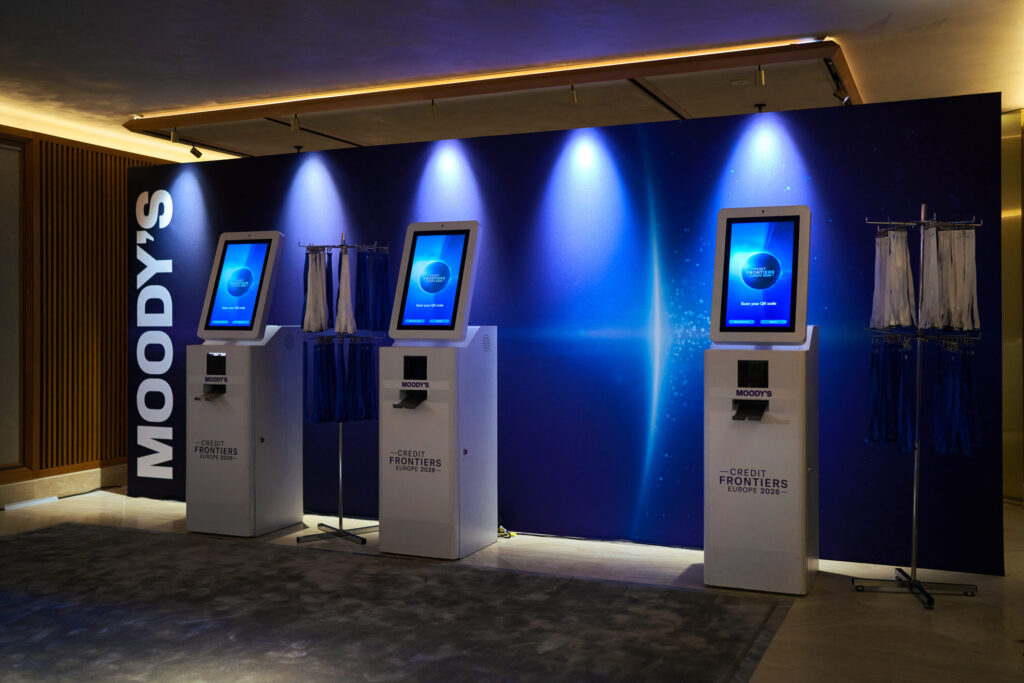
Scannable QR codes for digital business cards have become the quick and easy tech that is replacing paper almost everywhere we go. Menus, tickets, contact details, brochures and seating plans can all be paperless.
If you want to further elevate your digital touch points, interactive signage, click badges, and mobile apps can be used to engage guests. They provide gamification, polls and important details such as agendas all in one hub.
And if you do print, look sustainable printers. B Corp certified print supplier, SeaCourt, produces sustainable event branding through Planet Positive Printing™.
2. Choose a Sustainable Event Venue
Choosing a sustainable events venue can minimise the carbon footprint of an event. The good news is many amazing venues are investing into sustainability and launching eco-friendly initiatives, such as using renewable energy sources and recycling programmes.
When choosing an events venue check:
- Do they have a sustainability accreditation? You can also check if a venue has credentials for sustainable events such as ISO 20121.
- Where is their catering sourced?
- What are their waste management processes?
- What is their renewable energy usage?
- Can they track energy usage?
- What are the transport routes available?

3. Work with Responsible Event Suppliers
In events, impact lives in the details: The venues we propose, who we buy from, and the people you choose to work with matter. For example, opting for local suppliers is important to reduce transport emissions. A sustainable and traceable supply chain is a critical success factor in ensuring environmental and social standards are maintained.
Broadsword is a B Corp events agency and sustainability is a core part of every decision we make in event planning. B Corp suppliers are held accountable for doing the right thing for people, planet, communities, and clients and are part of a large network of companies all working towards a common purpose: using business as a force for good.
Working with social enterprises and charities can also be a great option to create positive impact from your event. There are food redistribution charities to reduce waste, team building activities for a good cause, and crewing companies who support and train the homeless.
Reevaluate your supply chain to include suppliers who demonstrate a strong commitment to sustainable practices.
4. Consider Virtual and Hybrid Event Formats
Virtual events and webinars continue to grow as an engagement tool and a sustainable option. Although they rose in popularity through the pandemic as an alternative solution to in person activities, long-term benefits arose from this format even as a smaller component of a live event such as bringing together a global audience with zero need of travel.
5. Reduce Single-Use Plastics at Your Event
A single conference attendee can generate up to 1.89 kg of waste a day, so it’s essential to promote and make it easy for guests to recycle. Have recycling points throughout your event and encourage people to recycle.
Single use plastics such as cups and cutlery can be easily replaced as there are many more sustainable options such as edible versions by Stroodles.

6. Choose Sustainable Event Catering
It’s been estimated that plant-based catering can reduce the carbon footprint of a 500-person event by up to 10 tonnes! Many catering companies offer a fully plant-based menu and sustainably and locally sourced food.
Planning the amount of food according to the number of attendees ahead of time also helps to reduce food waste.
There is often inevitable food waste which can be solved by partnering with food donation, livestock feeding programmes, food waste for industrial energy and compost creation.
Choose sustainable merch
You should say no to all plastic by giving reusable gifts such as water bottles that can be filled throughout the event at refill stations.
There are hundreds of sustainable gifts out there to combat the tote bag epidemic in the exhibition industry. Take biodegradable seed paper or edible straws for example or even adopting an animal in your attendee’s name. Handmade gifts by small local businesses or those that reinvest profits into a community or charity are truly purposeful gifts.
8. Reuse and Repurpose Event Production Materials
Set design is material-heavy but you don’t need to just use equipment once. Fabrics can easily be made into something new. You can opt for reusable signage that can be utilised for your next event which also saves money or use projection mapping rather than printing to display dynamic designs.
Broadsword can consider the environmental impact of staging, set design, graphics, AV equipment and materials during the production process.
9. Encourage Sustainable Event Travel
While we’re all thrilled to get back to in-person events, the challenge of attendee travel is no small one. To reduce this, we suggest a choice of venue that is easily accessible by public transport and asking attendees to feedback their transport so that it can be offset, or incentivising them to take a more sustainable journey.
Something to consider is how your guests and speakers are getting to the event. If all your guests are travelling in separate, private vehicles this adds a great deal to the carbon footprint of your event.
To reduce this you can choose a venue close to a public transport station, encourage attendees to take this option with incentives or provide shuttle services to the venue.
You can ask guests to provide their choice of transport in feedback forms to offset their impact from attending the event.
10. Measure and Reduce Your Event’s Carbon Footprint
Carbon measurement and offsetting is one way to do this. Broadsword, as a sustainable events agency, can provide detailed measurement and reporting across your event, so you can identify key contributors to your carbon footprint and make the case for reducing these next time round. You will get the event carbon footprint, industry benchmarking, event specific recommendations and offset value.
Broadsword are now implementing a carbon measurement tool to offer clients the option to offset the carbon footprint of events that can’t be reduced. This is measured across key factors such as waste management, transport and energy usage. It is then offset into a planet positive project of your choosing.
With data-driven reports, we help you to identify action plans to minimise your carbon footprint, to demonstrate meaningful progress for stakeholders, and to create carbon neutral events.
How to Measure the Sustainability of a Corporate Event
Event planning teams increasingly rely on data and analytics to manage environmental, social and reputational risks in events, meet regulatory requirements, achieve net-zero targets and satisfy stakeholder expectations. Identifying ways to measure the impact of your event on the environment allows you to reduce carbon emissions and continuously improve.
The impact areas you can measure in an event include:
- Carbon emissions from energy consumption, and production.
- Attendee travel and supplier transport.
- Waste generated and diverted from landfill.
-
Food waste and redistribution.
-
Supplier sustainability credentials.
-
Materials reused or recycled.
- Social value and community impact.
work with a sustainable events agency
Need a sustainable approach to your next event?
If you have an impactful event to deliver, a brief that is still taking shape, or a sustainability challenge you are not yet sure how to solve, talk to us about it. Broadsword is a leading sustainable events agency that is B Corp certified, specialising in producing events sustainably across conception to project delivery and review.
We can provide expert, in depth guidance and creative solutions across sustainability, accessibility and inclusion, and corporate social responsibility. Have a look at one of our resources: A guide to sustainable events.
We’d love to discuss how sustainability can be incorporated into your events.
Related insights
The Step-By-Step Guide to High-Impact Event Strategy
![two women at corporate event in conversation.]()

The Step-By-Step Guide to High-Impact Event Strategy