Why digital-first brands are moving marketing offline
The Most-Asked Questions on Event Technology, Answered
Event Technology: 10 questions event planners are asking
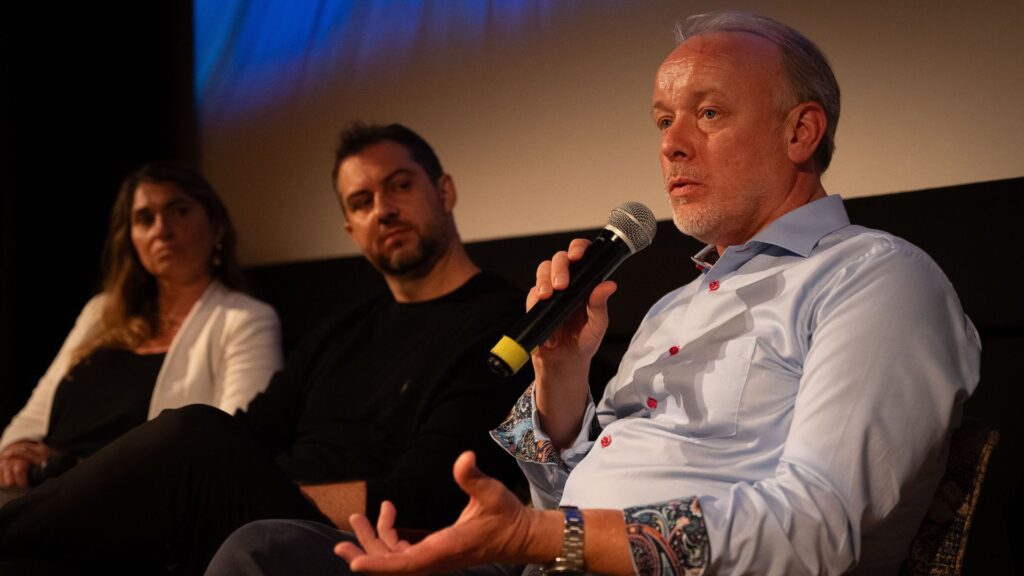
Event agency, Broadsword hosted a thought leadership panel for corporate event professionals and the latest session covered the topic on every planner’s mind: the growth of technology in the events industry.
Brands are racing to harness the awe-inspiring potential of emerging tools like AI, VR and AR to elevate their customer experiences and shape in the events landscape. Broadsword is supporting planners to do that.
To shape the session, we asked our audience of event professionals to co-create the conversation. They submitted the questions that matter most to them pre-event and our panel of experts answered them. On the panel was Broadsword’s Creative Director, Martin Walton, and Chief AI Officer at WPP, Daniel Hulme.
Explore below what event planners are asking about artificial intelligence, event technology, and the future of events in today’s technology driven climate. And, read the answers to find out how to use emerging technology to plan events.
Boom or doom. How is AI impacting the events industry?
Q: What’s the future of AI in the events industry?
A: The power of creativity is integral not only to connect people to brands, but also to solve big problems that are arising. The evolution of technology has enabled access to the tools to create, innovate, and analyse data for everyone with a phone and the internet. AI is therefore enhancing creativity and provides real opportunity for event planners.
Planners shouldn’t be afraid of AI; they should be using it.
Yet, events are human-centric, so technology should be used to enhance these experiences rather than replace human interaction. The human element remains integral and having specialist knowledge allows you to better use and engage with AI.
Q: What is the most common challenge for event planners when integrating technology into their events?
A: Many planners have to overcome reluctance and budget restraints from stakeholders when implementing new event technology.
This is because event technology is often quite exciting, but it can sometimes get in the way of your core message. When VR in particular rose in popularity, we were being asked by all of our clients how to use it. And the conclusion was that VR goggles were uncomfortable and inconvenient for attendees. Whereas AR and seamless wearables could be an alternate solution.
Think about what’s the best fit for your event’s purpose and audience.
Q: What are event planners using AI for?
AI is being used in the events industry to personalise attendee experiences, automate communications, analyse audience feedback and facilitate networking.
Common applications include:
-
Attendee matchmaking: recommending relevant connections based on attendee profiles, interests and objectives.
-
Personalised event communications: tailoring event information and recommendations to different audience segments.
-
Audience insights: analysing feedback and engagement data to help organisers understand what resonated.
-
Interactive experiences: incorporating AI-enabled characters, content or demonstrations into brand experiences.
-
Operational support: assisting with planning, content development and repetitive administrative tasks.
Most people are now using models like Chat GPT for task automation, insight extraction, and content generation, but these models still have room to grow. Most are trained on the past and sometimes come up with false information, but they are still developing at a rapid rate.
Flying more under the radar in the events industry, is human representation. We can put AI generated panellists on the stage to ask questions in real time, or on-screen avatars tracking the movements of the speaker behind the scenes.
How can immersion improve corporate events?
Q: What are the biggest event technology trends for corporate events?
A: When registering to attend an event, delegates are committing their time out of a busy schedule so it’s important to provide real value for them when they are there. Attendees don’t want to spend this time as a passive guest, listening to keynote after keynote in a plenary session. They want to contribute, participate, shape conversations, and make connections. As event planners we can facilitate this in a creative way through workshops, event technology, breakout sessions, and gamification.
Q: What event technology is best for audience engagement?
A: The keyword for planners is engagement. For example, data doesn’t have to be on charts on presentations – it can be visualised. If you have a thousand people in the audience, they don’t all need to know or can’t engage with an in-depth level of data. Perhaps a QR code takes those that want to know more to the data and allow them to zoom in on these higher-level takeaways.
The most impactful technology moments don’t come from trying to implement the newest technology for the sake of it – it begins with taking a detailed look at your goals, creative ideas, challenges, and discussions with experts.
Q: How can technology improve an event experience?
A: We all know that people’s attention spans drops quickly so it’s important to keep an agenda interesting but outside of the main plenary, you do have the potential of a captive audience throughout the entire event. In these moments what do you want to capture? What insight can an audience share with you? How can you facilitate networking? Or how can you engage them with your brand? Technology and creativity allows us to capture these moments better. For example, interactive touchscreens and walls can be used to poll audiences and canvas opinions.
The traditional event format is changing, shaped by experiential moments, hybrid events, and micro events. Consider hosting a half day event such as a breakfast as part of your wider communications campaign.
There have been some truly innovative uses of tech in recent years to help delegates connect more meaningfully at small and large-scale events. For example, AI powered matchmaking platforms can analyse attendee profiles, interests, and objectives to suggest quality connections and interest-based zones for certain topics – even creating virtual environments where avatars can engage with the topic.
How are event planners using technology as a creative tool?
Q: Can you use event technology on a limited budget?
A: You need to think about if the tool is the right fit for your purpose. Broadsword Creative Director, Martin, recommends brainstorming the big out-of-budget ideas first and reducing these or reframing these into what can actually be achieved to trigger creative thinking. Where you don’t have to have the latest tech, which always costs the most money, you can go back a couple of steps and narrow the experience down to having what it needs, to actually serve the intent better. And sometimes this means asking how to incorporate technology and then finding that a non-tech item serves the same purpose. For example, a sticker wall over a touchscreen wall. Coming up with solutions can be just as creative as integrating off the shelf technology.
Q: What’s the most common tech event planners are integrating right now to create memorable moments?
A: There is so much cool technology available to event planners as well as more traditional engagement tools that are being reframed in unexpected or new ways. LED walls, which we’ve all seen before, can be enhanced by syncing up the on screen content to live art, music, performances and displays, having AI characters and cinematic effects appear on screen, or creating a floor to ceiling immersive LED environment allowing a speaker to be standing in the world they are talking about. From a pragmatic budget perspective, simple tools like QR codes to network, share live information and create resource libraries can really add value for attendees.
WORK WITH US
Event Technology Specialists
Broadsword is an award-winning corporate events agency specialising in innovative production and cutting-edge event technology, working closely with leading brands to amplify their events and create immersive experiences.
We offer full-service support including technical event production and event management so that platforms, broadcast and interactive experiences support the wider event experience. With our full service events team, our technology solutions are powered by data, insights, and human expertise and fully connected to your event, audience, and brand from the start.
Get in touch to enquire about technology-driven event solutions.
Related insights
The Step-By-Step Guide to High-Impact Event Strategy
![two women at corporate event in conversation.]()
The Step-By-Step Guide to High-Impact Event Strategy