Impactful Charity Events: The Guide
What does it mean to go beyond the event brief?
When people think about event agencies, they often think about delivery: bringing experiences to life, managing logistics and creating memorable moments. All of those things matter, of course. But some of the most valuable work an agency partner can deliver happens long before the first concept is developed or the first event registration goes live. It comes from taking a step back and asking a simple question: Are we solving the right problem?
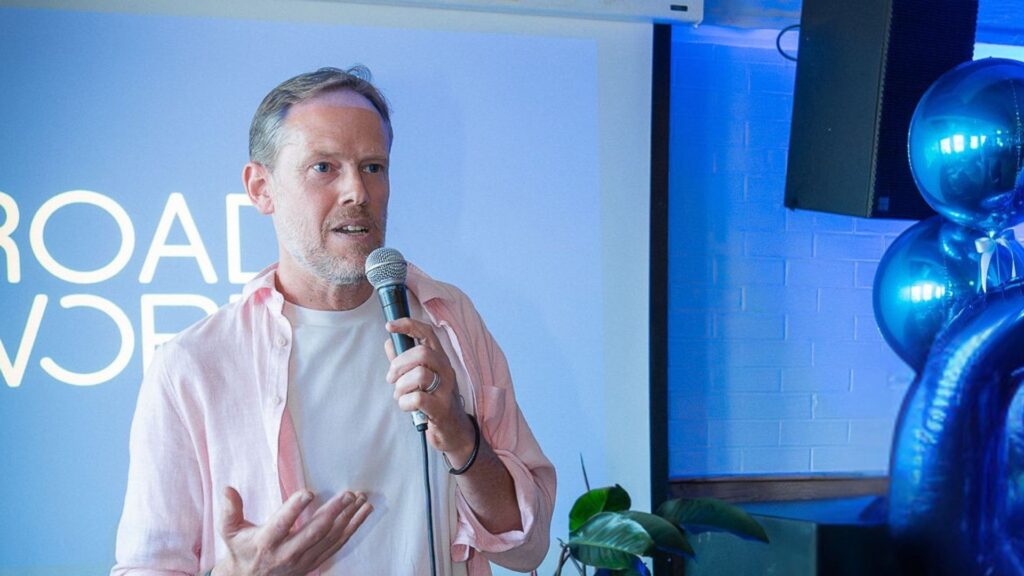
Broadsword’s Strategy Director, Matt Green, shares how to look beyond an event brief to uncover business challenges, and create strategic events with lasting impact.
“One of the clearest examples of this, for me, came last year during Broadsword’s rebrand journey. On paper the brief appeared simple: Refresh our identity to reflect the business we had become.
Like many rebrands, the initial conversation focused on visual identity: colours, logo design, website experience and creative expression. But the more we explored the challenge, the more we realised that redesigning how we looked was not the real task. The real question was whether we truly understood who we had become.
As agencies, it is easy to jump straight into solutions. Clients often come to us with a clear objective and a defined brief. But sometimes the greatest value we can add is by interrogating that brief before we begin executing it.
In our event work, this is often the first act of partnership. A brief might ask us to ‘refresh’ an established conference, increase registrations or make the experience feel more innovative. Before proposing formats or creative routes, we ask what has prompted the request. Is attendance the real issue, or is it the quality of engagement? Does ‘innovation’ mean visible novelty, or a more useful exchange between the people in the room? A new stage treatment can change how an event looks; it cannot, on its own, solve a problem of relevance, trust or behaviour.
For our rebrand, that meant stepping away from creative outputs and returning to first principles. Over the period of a month, I spoke to clients, suppliers and team members, asking each the same questions about how they experienced Broadsword, what differentiated us and what impact we had on the people around us. The process was less about collecting feedback and more about understanding perception. The exercise was not about validating our assumptions. It was about testing them.
What emerged was something far more powerful than a new visual identity. I discovered that our values were already being defined by our behaviour. The language used by stakeholders repeatedly pointed towards the same themes: authenticity, bravery and commitment. The answers were not hidden inside a workshop deck. They existed in the experiences people had of working with us every day. From there, a framework for what we collectively needed to do began to form.
Those values also give us a practical test for event decisions. Authenticity means designing around what the audience and organisation genuinely need, rather than borrowing a fashionable format. Bravery means being willing to challenge a familiar agenda, venue flow or content model when it no longer serves the objective. Commitment means staying with that challenge all the way through – translating the thinking into the detail, defending the elements that matter and measuring whether they made a difference.
That process reinforced an important lesson that applies equally to events. The best outcomes rarely come from executing a brief more efficiently. They come from understanding the context around it. A conference might be positioned as an engagement event, but the underlying challenge could be organisational change. A leadership summit might appear to be about content delivery, when the real objective is aligning senior stakeholders around a shared direction. A customer event may look like a product launch on the surface, but ultimately be about strengthening trust and long-term relationships.
Take a long-running flagship event. The brief may be to make the next edition feel fresh. The obvious response is to change the look and add new production elements. But if delegates already value the familiarity of the event, wholesale reinvention could undermine one of its strengths. The better question may be where familiarity has become predictability, and where it still creates confidence. That leads to more purposeful choices – perhaps reshaping a passive session into a moderated debate, redesigning the networking around useful introductions, or extending the strongest insights into post-event content – rather than changing everything for the sake of novelty.
When agencies take time to understand the wider business landscape, they can help clients solve challenges they have not yet articulated. That is where true partnership begins. It also brings us to the next stage of the journey.
Going beyond the brief also requires bravery.
Not in a creative sense alone, but in having the confidence to challenge assumptions. One of the themes that emerged from our rebrand work was that clients valued our willingness to question conventional approaches. They did not simply want delivery; they wanted perspective. As an agency, maybe this is our superpower. Clients are experts in their organisations, while agencies bring an external viewpoint, breadth of experience and cross-sector insight. Clients can understandably find themselves working within their own bubble. Or role as an external events agency can be to provide perspective and validation. Sometimes the best thing we can do is confirm a direction. At other times, the best thing we can do is suggest a different one. Neither is about being right. Both are about helping to achieve the best possible outcome.
Being brave does not mean being contrary for effect. Challenge is only valuable when it is rooted in evidence, experience and a shared ambition for the outcome. It might mean telling a client that an overloaded agenda is working against engagement; that a technology activation adds complexity without adding value; or that the safest format is also the least likely to create the conversation they want. Just as importantly, commitment means not walking away once that challenge has been voiced. It means helping clients navigate the consequences, bring stakeholders with them and deliver the alternative with confidence.
Are we creating value beyond the event?
Fifteen months after our rebrand launched, one thing stands out. The biggest impact was not the new logo, website or visual identity. It was the clarity that came from understanding who we are, what we stand for and how we create value. That clarity continues to influence decisions across the business today.
For us, that means asking at the outset: What should people think, feel or do differently as a result of this event? What value should exist before they arrive and after they leave? The answer might lead us to involve delegates in shaping the content, design formats that surface better questions, create assets that extend the conversation, or capture insight that gives sales and marketing teams a more meaningful route to follow-up. The live event is still the focal point, but it is no longer the full measure of success.
For me, that is what going beyond the brief really means. It is moving beyond deliverables to outcomes, beyond activity to impact and beyond answering the question to understanding why it was asked in the first place. The most successful agency-client relationships are not built on execution alone. They are built on curiosity, challenge and a shared commitment to finding better answers.
Authenticity keeps us anchored in what matters. Bravery lets us challenge the first answer. Commitment turns a better answer into an experience that works.”
Interested in working with us to plan strategic business events? We are an events agency specialising in creating financial services and fintech sector corporate events that deliver lasting business impact. Explore our services from event marketing and comms planning to impactful production and event playbooks.
Related insights
How to make your event work harder: before, during, and after the day
![two women take selfie against branded backdrop]()
How to make your event work harder: before, during, and after the day