Impactful Charity Events: The Guide
How to get the best from a creative team
Every great event starts with an idea. But turning that idea into an experience that truly connects with an audience takes more than creativity alone. It takes direction.
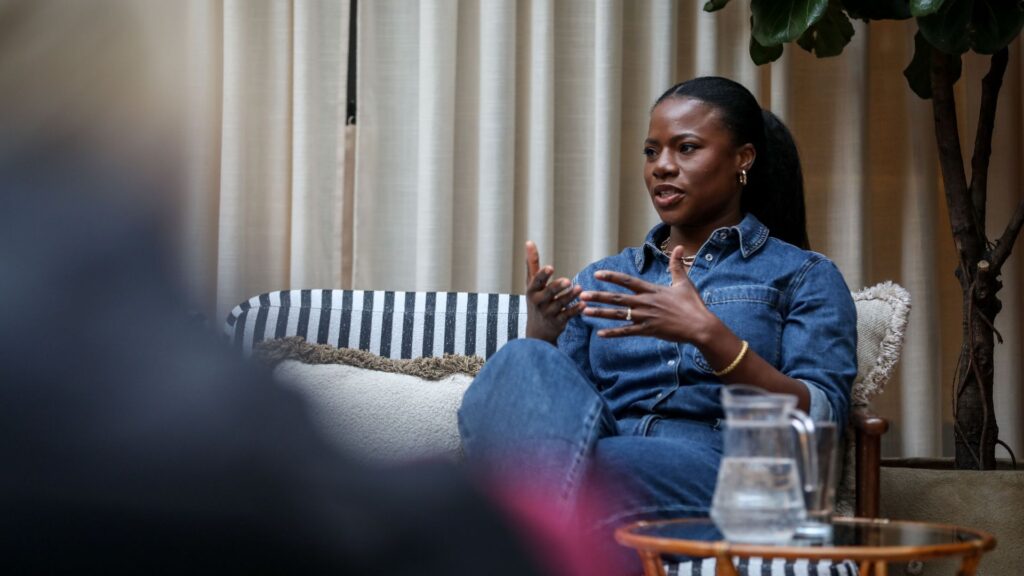
Broadsword’s Creative Lead, Aisha Jesus, shares how to unlock better thinking, stronger collaboration, and greater impact, to work better with a creative department.
“I’ve recently passed my driving test and, along with my new car and licence, I’ve gained a love-hate relationship with motorways and roundabouts — and the right to turn everything into a driving analogy. Insufferable, I know, but very fitting in almost every situation.
Plug your destination into a sat nav and it will work out the best way to get there. It considers different routes, avoids traffic and adapts when it encounters a diversion or road closure.
That’s exactly how we see a creative brief.
A good brief gives the creative team a clear destination while allowing us to explore the best route to reach it. It helps us understand what you’re trying to achieve, why it matters and what you want your audience to think, feel or do before, during and after the event.
Most importantly, it helps us answer the fundamental question: what problem are we actually trying to solve?
How to brief a creative team
You don’t need to have all the answers before you come to your creative agency. In fact, part of our role as a creative events partner is to ask questions, challenge assumptions and help turn an initial ambition into a clear creative direction.
However, the more useful context you can give us, the better we can understand the journey — and the more effectively we can help you navigate it.
A great brief doesn’t need to be lengthy. It simply needs to provide a clear starting point and enough information for us to understand what really matters.
Try to answer the following questions:
- What is happening in the business? What challenge or opportunity does the event need to address?
- What are you trying to achieve? What would a successful outcome look like, and how will you measure it?
- Who is the audience? What do you know about their needs, expectations, motivations or previous experiences?
- What should people think, feel or do? What message needs to land, and what action or change do you want to inspire?
- What has been tried before? What worked, what didn’t and what have you learned from previous events?
- What are the practical parameters? Be clear about the available budget, timings, venue, required deliverables and any operational limitations.
- What is fixed and what is flexible? Tell us about any brand requirements, mandatory elements or constraints, as well as where there is room to explore.
- Who needs to be involved? Knowing who will contribute to or approve the creative direction helps us build the right process from the start. Within our events agency we have an experienced creative team available to offer bespoke creative support and realise the vision of your event.
Being open about the budget is particularly important. It doesn’t restrict creativity; it allows us to focus our thinking on ideas that can realistically be delivered and identify where investment will have the greatest audience impact.
Brief the challenge, not just the output
A brief should give the creative team direction without dictating every turn.
It can be tempting to begin with a predetermined solution: an interactive activation, an immersive entrance or a particular piece of technology. But starting with the output can limit the creative possibilities before we have properly understood the problem.
For example, a request for an interactive activation might actually be driven by a desire to encourage delegates from different markets to meet and start conversations. Once we understand that underlying objective, we can explore a much broader range of ideas—and the most effective solution may not be a traditional activation at all.
Tell us about the challenge, the audience and the change you want to create. We can then help determine the best way to bring that ambition to life.
The benefit of involving your creative partner early
Bringing the creative team into the conversation early helps us see the bigger picture.
At Broadsword, our creative team works closely with our event and production specialists from the outset. This ensures that ideas are grounded in business objectives, audience insight, previous learning and the practical realities of delivery.
Early collaboration also helps us create a more consistent and cohesive audience journey. Rather than designing a series of disconnected moments, we can consider how the whole experience fits together—from the initial invitation and pre-event communications to the arrival, content, environment, networking opportunities and post-event follow-up.
This is where a clear brief becomes especially valuable. It gives us the confidence to identify new opportunities, connect ideas across different parts of the event and focus investment on moments that will make a meaningful difference to the guest experience.
It can also help avoid wasted time and budget. When everyone understands the destination from the beginning, ideas can be assessed against clear objectives rather than personal preference alone.
Allow the journey to evolve
Like any realistic journey, there may be a few diversions along the way. Budgets evolve, objectives shift and circumstances change.
A creative brief shouldn’t be treated as something that is written once and then set in stone. It should provide a shared foundation that can guide decision-making as the project develops.
If that foundation is solid, it becomes much easier to respond to change without losing sight of the original ambition. New ideas can be explored, practical challenges can be overcome and creative decisions can still be tested against the audience and objectives.
So, the next time you’re writing a creative brief, don’t worry about having all the answers or arriving with a finished solution.
Tell us where you’re trying to get to, who you’re taking with you and why the destination matters.
We’ll help you find the best route”.
Related insights
How to make your event work harder: before, during, and after the day
![two women take selfie against branded backdrop]()
How to make your event work harder: before, during, and after the day